Support Scholarship-Level Reasoning —Without Burning Yourself Out
Symbai is an AI-powered debate and argument-mapping platform that trains students to build, test, and refine arguments under pressure.
The result: stronger evaluation, clearer judgement, and more confident performance — without extra prep or marking.
Scholarship-level critique practice — on demand
At Scholarship level, the hard part isn’t writing more — it’s getting students fluent at evaluation: critique, weighing, and judgement.
he catch is that this kind of thinking doesn’t happen just because students read more or draft more. It usually needs the right conditions:
a claim worth testing, an opposing line to respond to, clear criteria for how to critique, and feedback that tells students whether their move actually worked.
In most Scholarship programmes, teachers end up doing that setup work again and again:finding or generating arguments, designing prompts that force weighing, running tutorials where opposition is modelled, then giving feedback afterwards.
Symbai reduces that setup burden by making critique practice the default.
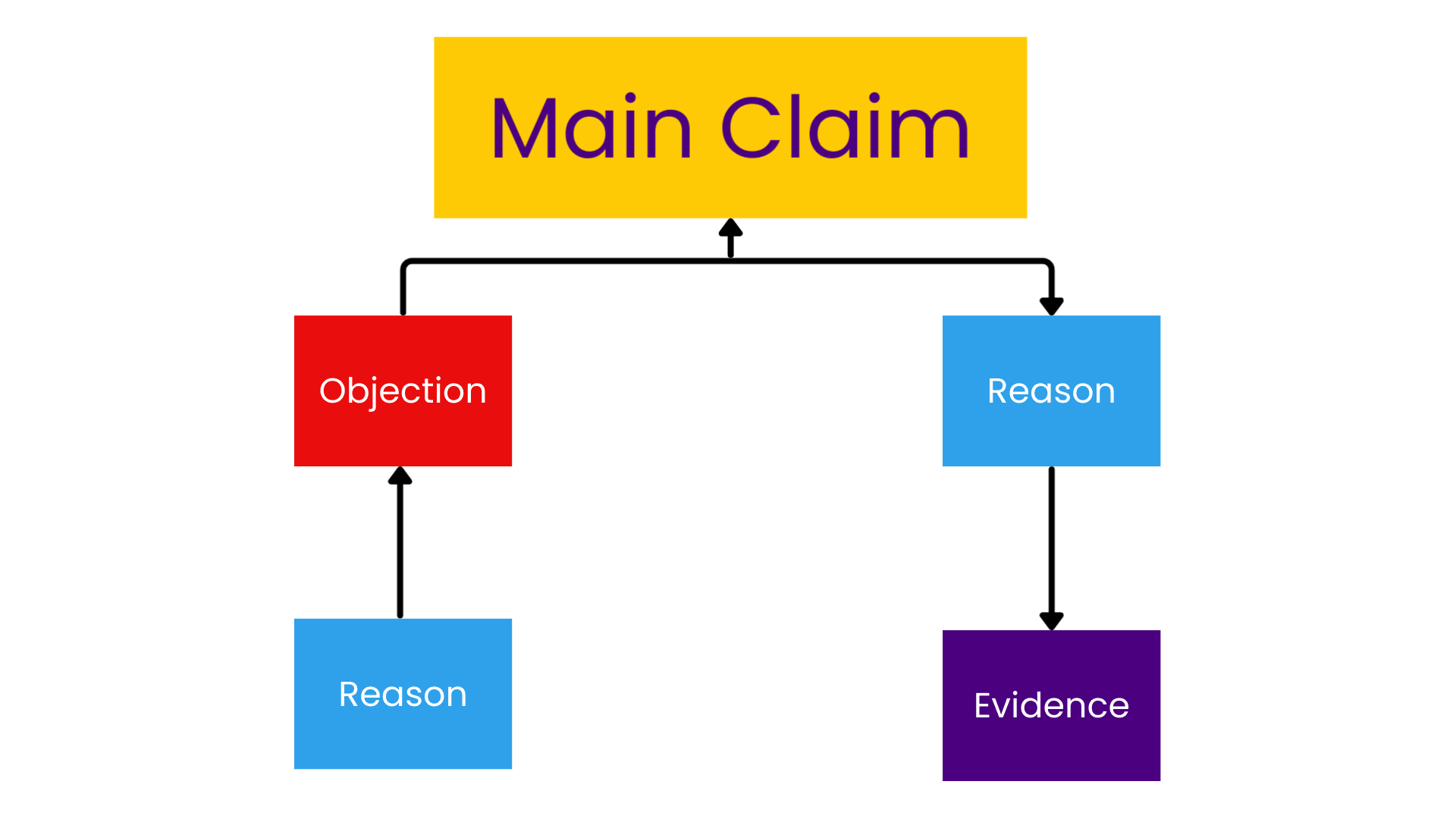
Students work with arguments as visible structures, face opposition on demand, and practise specific critique moves (refutation, minimising importance, exposing contradictions etc.) in a way that’s explicit and repeatable.
How NCEA Scholarship works:
Setup heavy
Before students can practise Scholarship-level evaluation, a lot has to be built first: usable material, a clear line, a counter-position, and prompts that force weighing rather than summary. That setup usually falls on the teacher — and it has to be rebuilt across the year.
Reps are scarce
Top-end critique only becomes fluent through repetition, but most “reps” happen in teacher-led moments (tutorials, conferencing, class discussion). That caps practice time and means many students get too few real goes at weighing, judgement, and revision.
Feedback is delayed
Students attempt critique in drafts, then wait for feedback later. By the time it arrives, the thinking moment has passed — so improvement is slower, iteration is patchy, and students repeat the same safe moves.
Thinking is fragile
Under exam pressure — or when the material shifts — students can revert to description, structure-first writing, or untested claims. Without enough practiced critique and weighing, strong reasoning isn’t yet automatic when it matters most.
Thinking starts early
Students practise critiquing arguments and weighing explanations even while they’re still learning content.
Critique is explicit
Evaluation isn’t implied — it’s built into the workspace through visible rebuttal types and argument structures.
Practice is independent
Students debate, revise, and reflect in Symbai without waiting for teacher-led sessions.
Thinking transfers
When content shifts, students still have a way to reason through unfamiliar material with confidence.
Without Symbai
Setup heavy
Before students can practise Scholarship-level evaluation, a lot has to be built first: usable material, a clear line, a counter-position, and prompts that force weighing rather than summary. That setup usually falls on the teacher — and it has to be rebuilt across the year.
Reps are scarce
Top-end critique only becomes fluent through repetition, but most “reps” happen in teacher-led moments (tutorials, conferencing, class discussion). That caps practice time and means many students get too few real goes at weighing, judgement, and revision.
Feedback is delayed
Students attempt critique in drafts, then wait for feedback later. By the time it arrives, the thinking moment has passed — so improvement is slower, iteration is patchy, and students repeat the same safe moves.
Thinking is fragile
Under exam pressure — or when the material shifts — students can revert to description, structure-first writing, or untested claims. Without enough practiced critique and weighing, strong reasoning isn’t yet automatic when it matters most.
With Symbai
Thinking starts early
Students practise critiquing arguments and weighing explanations even while they’re still learning content.
Critique is explicit
Evaluation isn’t implied — it’s built into the workspace through visible rebuttal types and argument structures.
Practice is independent
Students debate, revise, and reflect in Symbai without waiting for teacher-led sessions.
Thinking transfers
When content shifts, students still have a way to reason through unfamiliar material with confidence.
Scholarship Outcomes for Students
Compete at true Scholarship depth
Train in formal debate flow to build exam-ready arguments.
Master rebuttal under pressure
Anticipate attacks, refine logic, and convert weak points into wins.
See and shape your logic
Visual debate maps reveal gaps and guide Scholarship-grade essay structure.
Level up when you’re ready
Difficulty scales to Expert: stronger prompts, tighter reasoning, academic vocabulary.
Turn debate into draft
Instant Essay Export converts your best lines into a clean outline/PDF for revision.
Key Benefits For Teachers
Low Prep, High Impact for Teachers
Create Scholarship-ready activities quickly — structure, opposition, and prompts included.
Lower feedback load
Students can iterate between tutorials, and you decide how feedback appears — either released instantly from the AI or reviewed and adjusted by you before students see it, so you’re not carrying every improvement through marking.
More consistent evaluation
A shared critique framework reduces “teacher-to-teacher” variation and makes expectations clearer.
Less Guesswork About Student Progress
Use contact time for high-leverage coaching, not manufacturing the conditions for critique.
Theme rebuild support
For theme-heavy subjects, generate theme-aligned practice in minutes instead of weeks.
Sustainable Scholarship delivery
Less after-hours intensity and less reliance on one teacher’s capacity to keep the programme running.
How Symbai Works
1
Choose A Debate Topic
Our AI can recommend a suitable debate topic or choose your own. It will then generate content for your students to debate against.
2
Set Conditions
Select the perfect settings for each student: challenge level, access to the AI tutor, access to copy/paste and much more.
3
Launch Debate
Each student debates with their own AI under the learning conditions you set for them. Teachers get access to performance and engagement data as the debates unfold.
4
Review & Reflect
Leave each debate with rich insights into every student's content knowledge and critical thinking growth. Each debate adds data to a critical thinking growth profile.
Critique & Evaluation → Enhanced with Symbai
Without Symbai
Critique can stay implicit — students often see it modelled, but don’t always get a shared, repeatable framework.
Practice opportunities are constrained by time — most “reps” come through tutorials, conferencing, and marked drafts.
Feedback often comes after the attempt — so students can repeat safe moves before they get a chance to adjust.
With Symbai
Critique is explicit: students choose how they respond (refutation, minimizing importance, expose contradictions etc.)
High-rep practice: students can rehearse Scholarship-level evaluation anytime, not just in tutorials
Instant feedback, with teachers able to override/add guidance when needed
Weighing becomes habitual because opposition is built into every session
Result - Less reliance on “perfect alignment”, because students can reason their way through whatever the paper puts in front of them.
Built from Scholarship Teaching — Not an “AI Idea”
Symbai started when Connor was teaching NCEA History Scholarship.
He kept noticing the same pattern: the Scholarship students who were also in his debate club were improving the quickest — not because they had more content, but because debate trained the parts of Scholarship that matter most: interrogating claims, weighing evidence, responding to opposition, and refining ideas through challenge.
But debate wasn’t accessible to everyone. Plenty of capable Scholarship students hated public speaking, stayed quiet, or avoided debate spaces entirely — even though they needed that kind of practice.
So Connor set a goal: make the benefits of debate available to every Scholarship student — without requiring confidence in a room.
He achieved it by combining debate with argument mapping: students still face real opposition and have to justify, rebut, and refine their thinking — but they do it visually, in a structured workspace that makes critique explicit and keeps the intellectual bar high.
Want the research behind this?
Explore the evidence for debate + argument mapping
Built from Scholarship Teaching — Not an “AI Idea”
Symbai started when Connor was teaching NCEA History Scholarship.
He kept noticing the same pattern: the Scholarship students who were also in his debate club were improving the quickest — not because they had more content, but because debate trained the parts of Scholarship that matter most: interrogating claims, weighing evidence, responding to opposition, and refining ideas through challenge.
But debate wasn’t accessible to everyone. Plenty of capable Scholarship students hated public speaking, stayed quiet, or avoided debate spaces entirely — even though they needed that kind of practice.
So Connor set a goal: make the benefits of debate available to every Scholarship student — without requiring confidence in a room.
He achieved it by combining debate with argument mapping: students still face real opposition and have to justify, rebut, and refine their thinking — but they do it visually, in a structured workspace that makes critique explicit and keeps the intellectual bar high.
Want the research behind this?
Explore the evidence for debate + argument mapping
Raise the Bar — Not Your Workload
See Symbai in your context in a short walkthrough; we’ll build and run a Scholarship-ready example for your subject in minutes.
Or explore independently with a 1-week free trial — no commitment, cancel anytime.
Raise the Bar — Not Your Workload
See Symbai in your context in a short walkthrough; we’ll build and run a Scholarship-ready example for your subject in minutes.
Or explore independently with a 1-week free trial — no commitment, cancel anytime.
What others are saying
“I believe Symbai has the potential through its unique multi-AI approach to become ubiquitous in the field of critical thinking in the way that Grammarly is associated with writing or Quizlet is with flash cards.”
Nick Hanne
Education Partnerships Manager at the Free Speech Union NZ
“Symbai fills a major gap in education — it equips students to think logically, independently, and critically. Unlike other tools, it offers a neutral, AI-driven platform where students can genuinely practise debating and refine their thinking. It’s like having a 24/7 mentor that challenges without bias. A powerful solution for those seeking depth over group think in today’s education landscape.”
Todd Roughton
Former Principal, HSNZ