More Practice. Better Feedback. A Stronger Debate Club.
Give every speaker feedback they can use and more ways to practice between rounds. Symbai brings live debates, AI-assisted adjudication and your club’s resources together, with you in control.
Two months free. No commitment.
Make Your Coaching Time Go Further
Give every speaker a clear next step
Turn each round into written adjudication, individual feedback and suggested practice that students can revisit.
Focus on the speakers
Keep timing, live transcription and notes together. Use AI assistance to review the round, then make the final judgement yourself.
Keep students practising
Students can build cases, practise rebuttal and debate against AI between club sessions.
Build a lasting club record
Keep students, teams, resources and debate history connected, ready for next term and the next coach.
How Symbai Works
1
Run Your Round
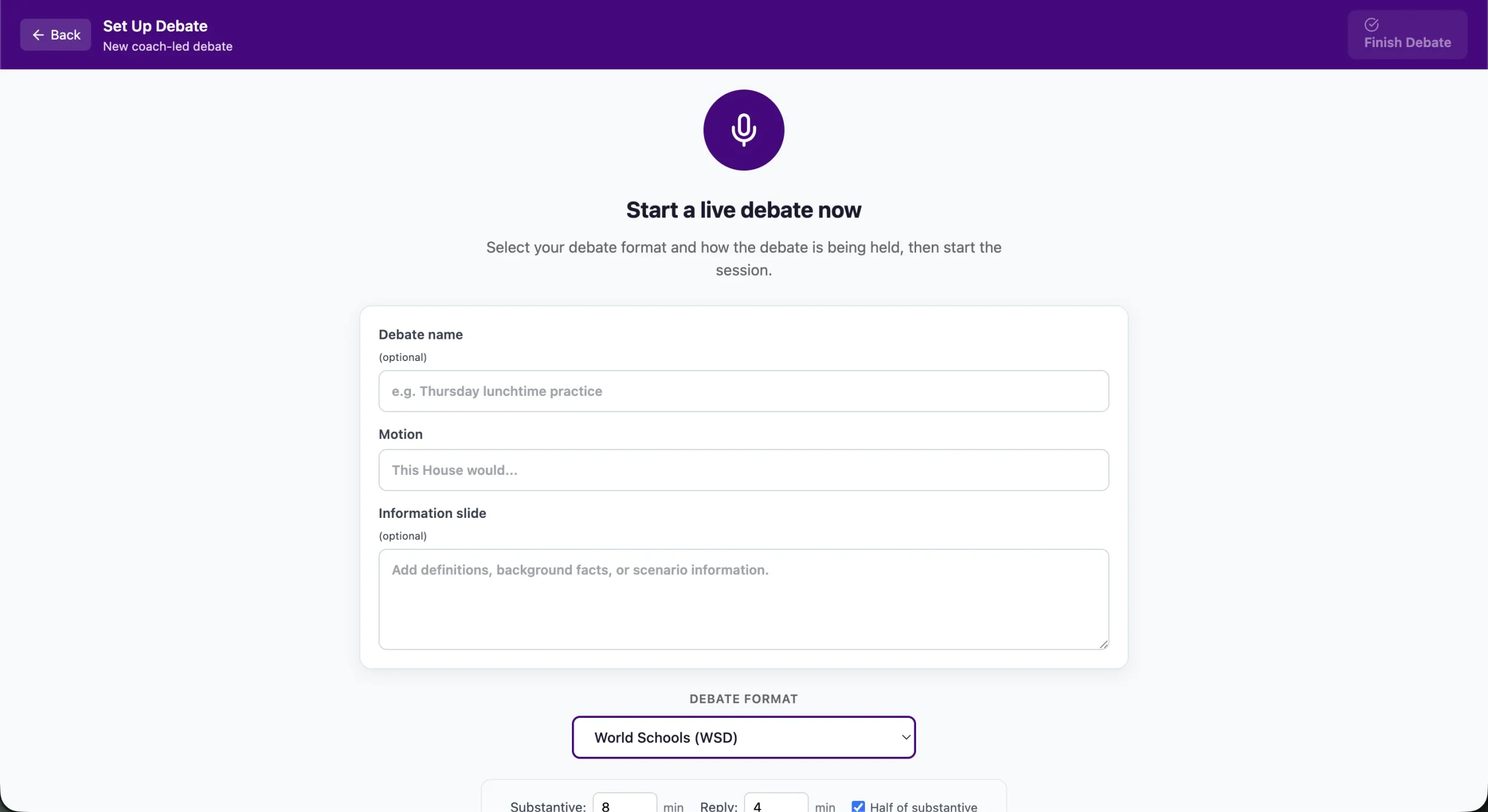
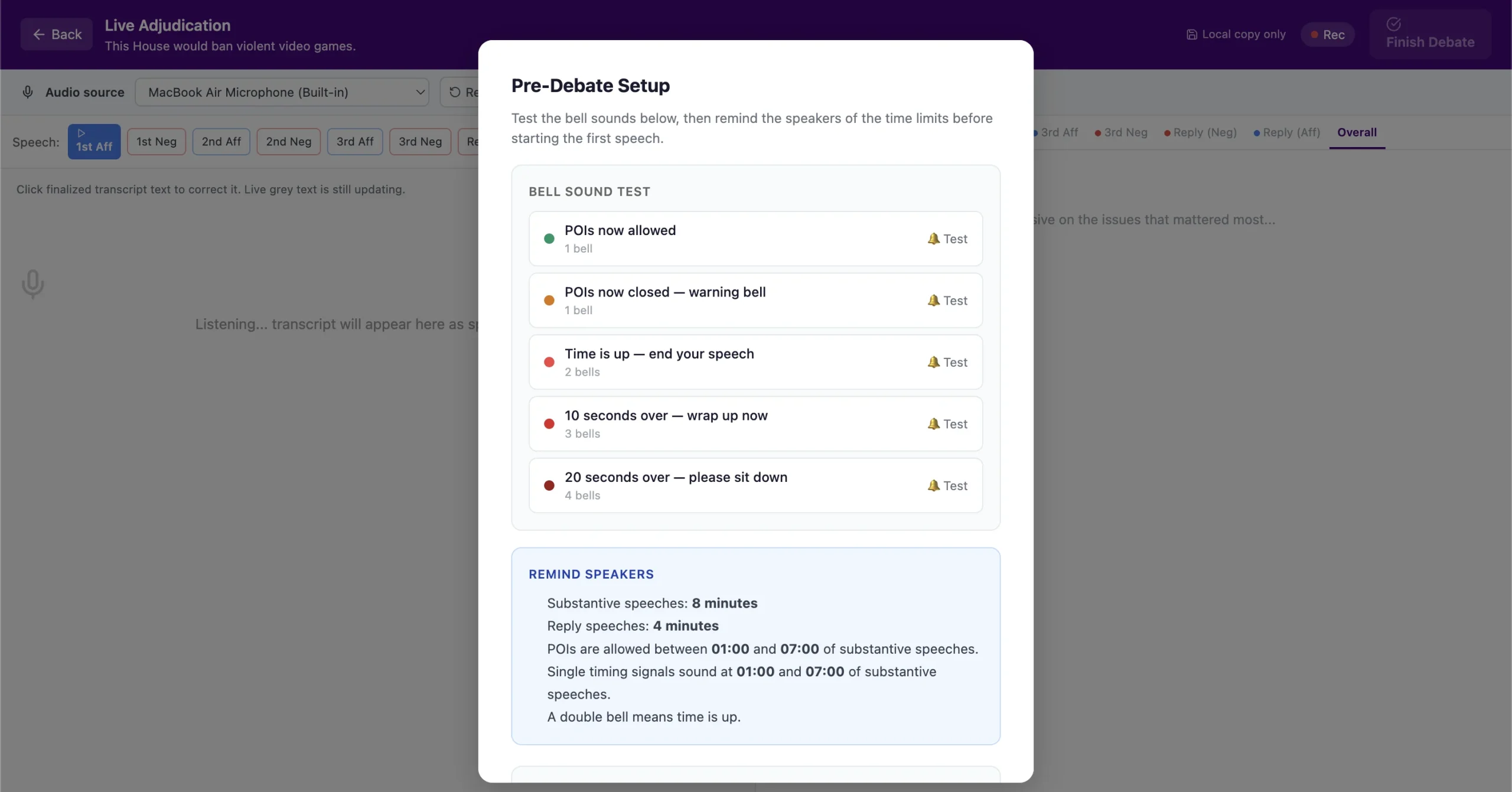
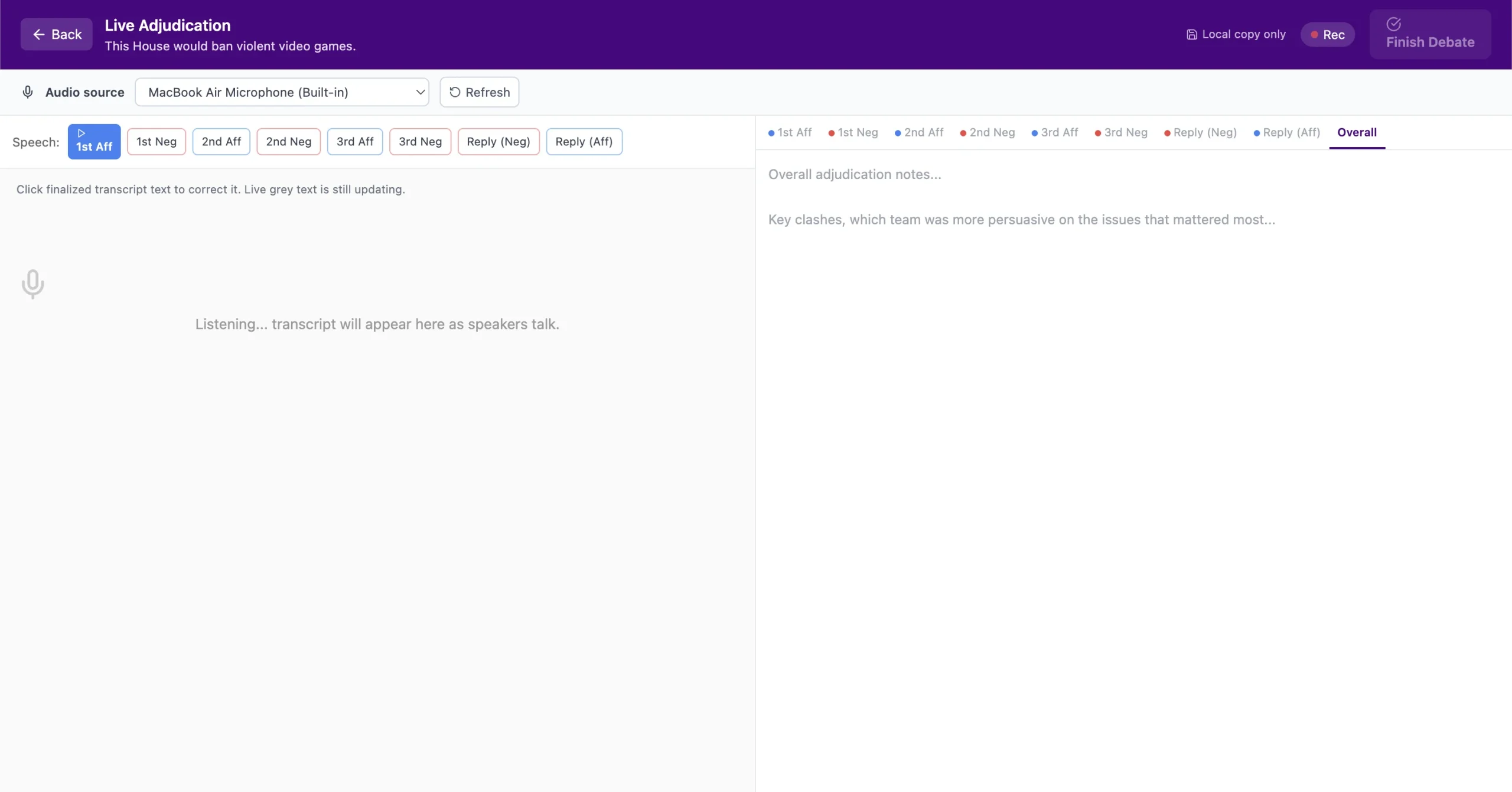
Choose the format and speakers, check the timing bells and start. Timers, live transcription and your notes stay together as students debate.
2
Give Feedback That Lasts
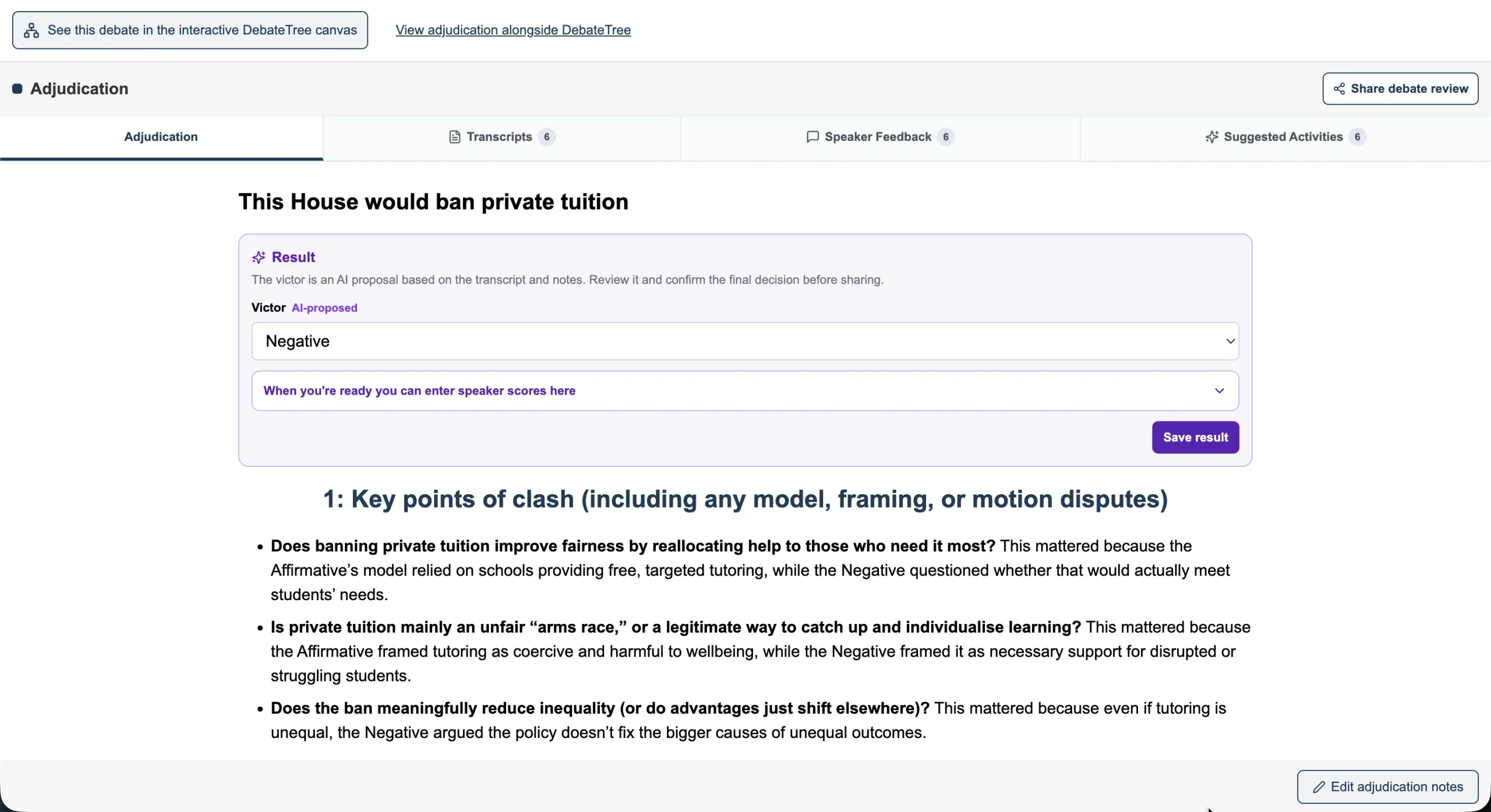
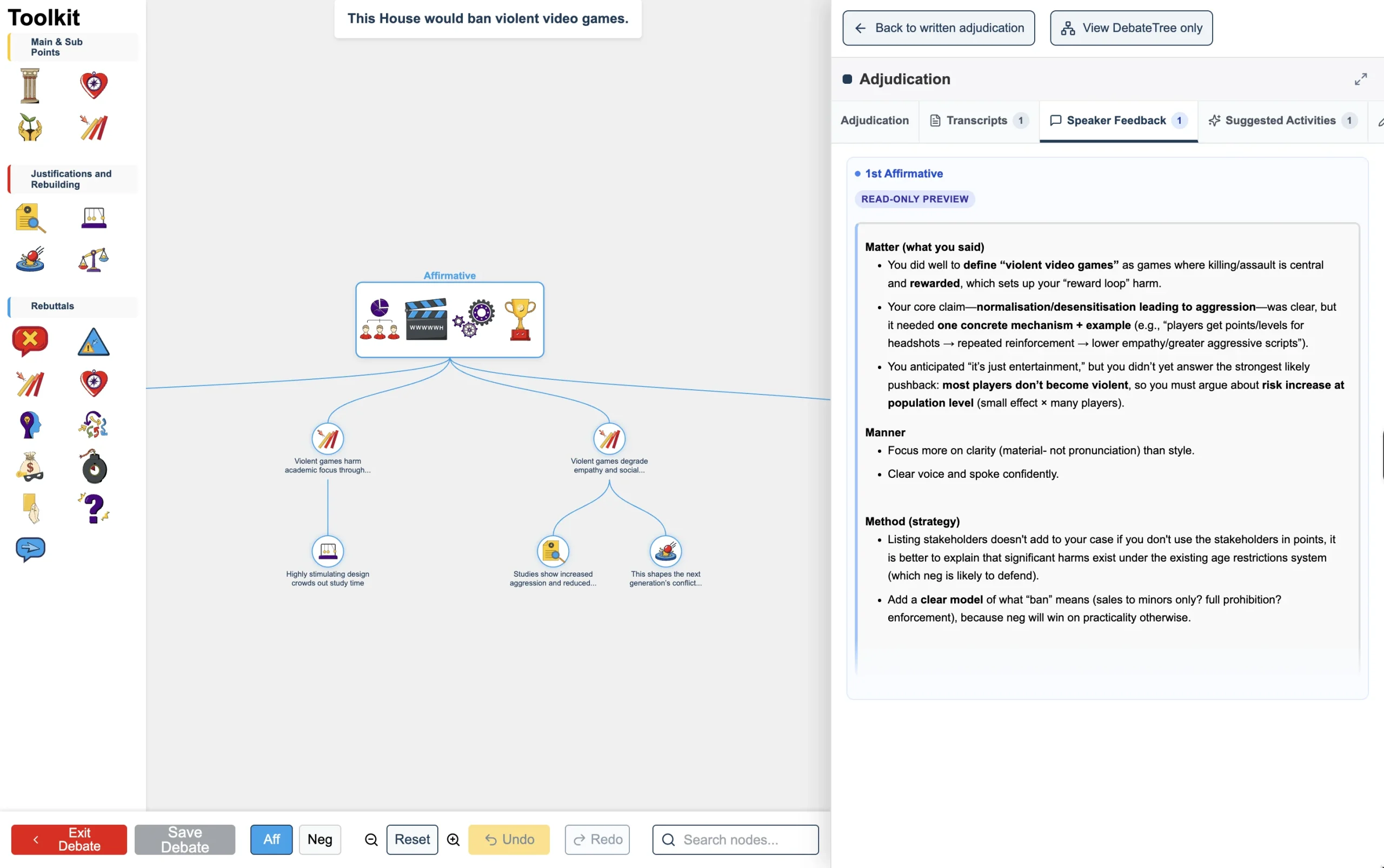
Review the transcript and AI suggestions, then confirm your judgement. Share written adjudication, individual speaker feedback and clear next steps.
3
Keep the Practice Going
Set targeted follow-up activities. Students can review the round in DebateTree, strengthen a case or practise rebuttal with AI before the next session.
Built by School Debate Coaches
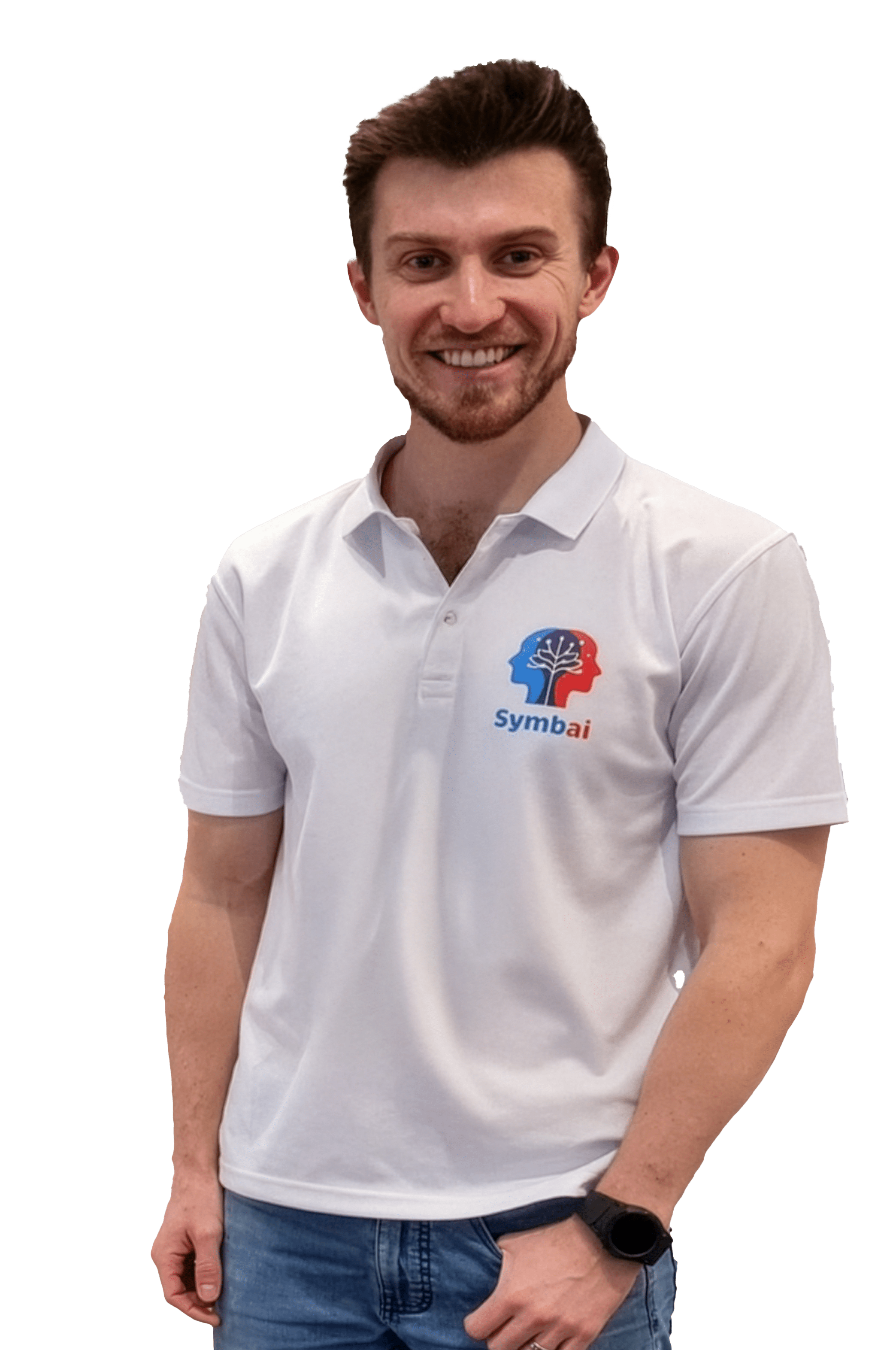
Connor McFadyen
Founder & CEO
Seven years as a school Teacher in Charge of debating.

Sharuka Wikramanayake
Chief Product Officer
Former New Zealand national high school coach and World Universities semi-finalist.
Try Symbai With Your Own Debaters for Two Months
Run real rounds, review speaker feedback and try independent practice with your own students.
Two months free. No commitment.
Your existing club work and non-AI tools remain accessible on the free tier if you choose not to continue.
One Account for the Work Around Your Debate Club
Live Debate Workspace
Run format-aware rounds with speaker allocations, timers, bells, POI tracking, live transcription and adjudication notes.
Adjudication & Speaker Feedback
Turn a completed round into a written adjudication, individual speaker feedback and targeted follow-up activities.
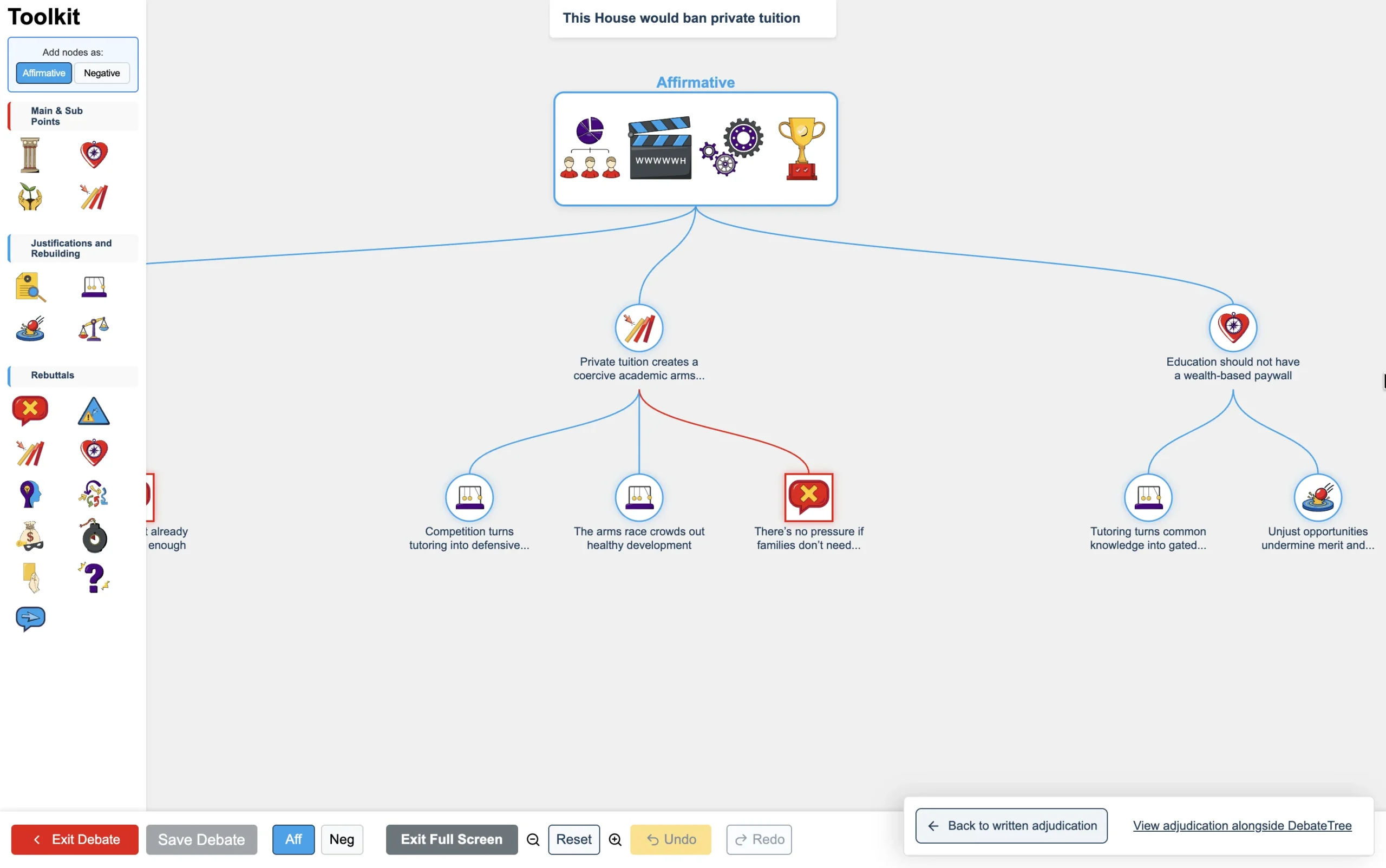
Interactive DebateTree Review
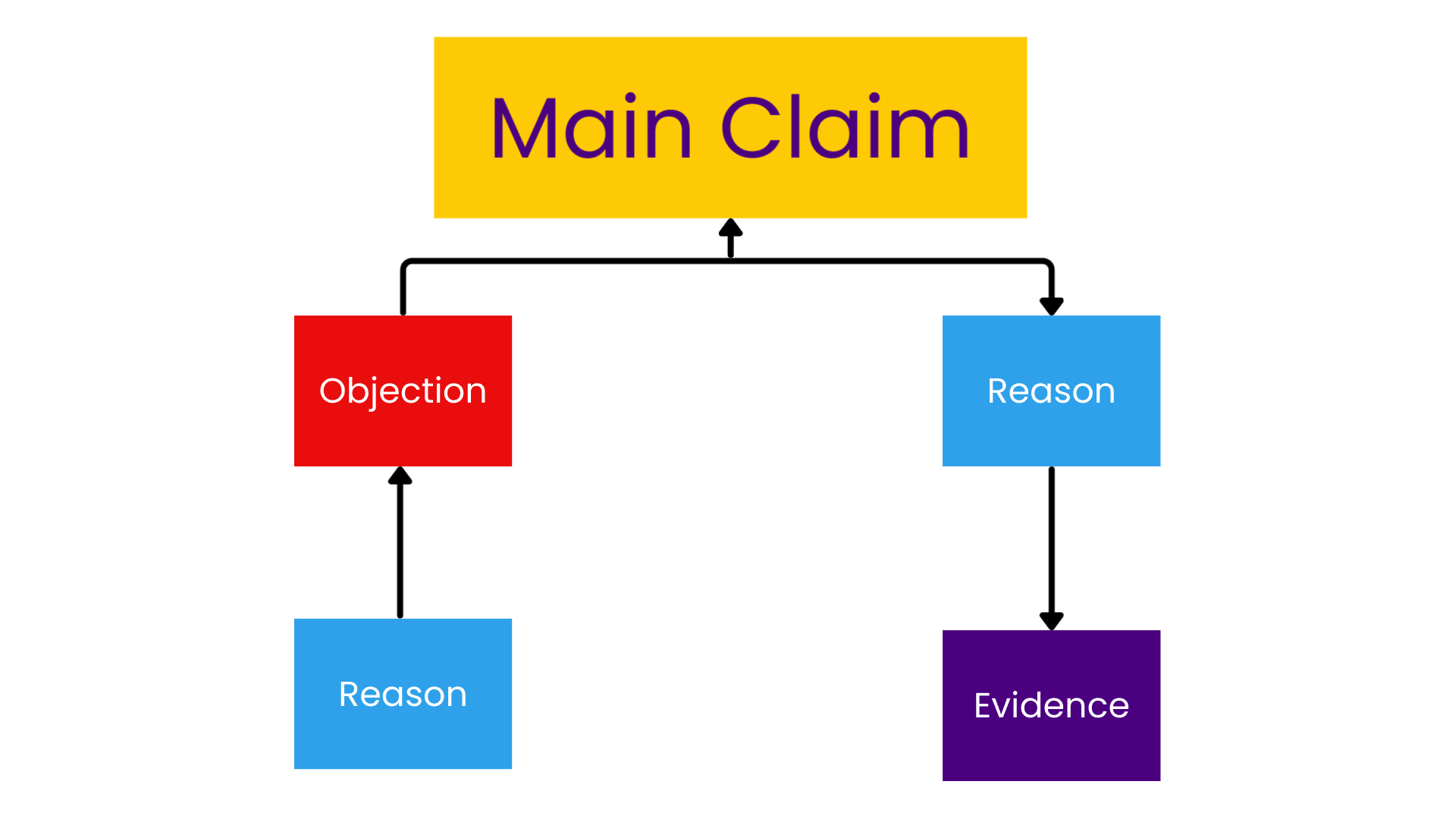
Open the debate visually to inspect how arguments, rebuttals and points of clash developed across the round.
Independent AI Practice
Give students rebuttal practice, AI opposition and tutoring between live rounds — with difficulty and support adjusted to the student.
Students & Persistent Teams
Manage your squad, build reusable teams, save normal speaking positions and organise student accounts from the coach dashboard.
Scheduled Debates
Prepare upcoming rounds in advance with the motion, format, speakers and adjudication settings already organised.
How Symbai Builds Core Debating Skills
Adjudication & Feedback
Without Symbai
- Adjudicators have to listen, flow the debate, take notes and prepare feedback at the same time.
- Most feedback is delivered orally and is quickly forgotten.
- Individual speakers may receive only a small amount of personalised feedback.
- Students often know who won without fully understanding how the debate was decided.
- Valuable coaching insight disappears once the round is over.
With Symbai
- Run the same live debate you would normally run.
- Use Symbai to help create a clear written adjudication from the round.
- Give students feedback they can revisit after the session.
- Provide individual speaker feedback rather than relying solely on a single team-level discussion.
- Review the debate visually through its interactive DebateTree when deeper analysis is useful.
- Move between the accessible written adjudication and the underlying argument structure without requiring coaches to learn DebateTree before they get value from the system.
- Review and edit AI-supported adjudication: the human coach remains in control.
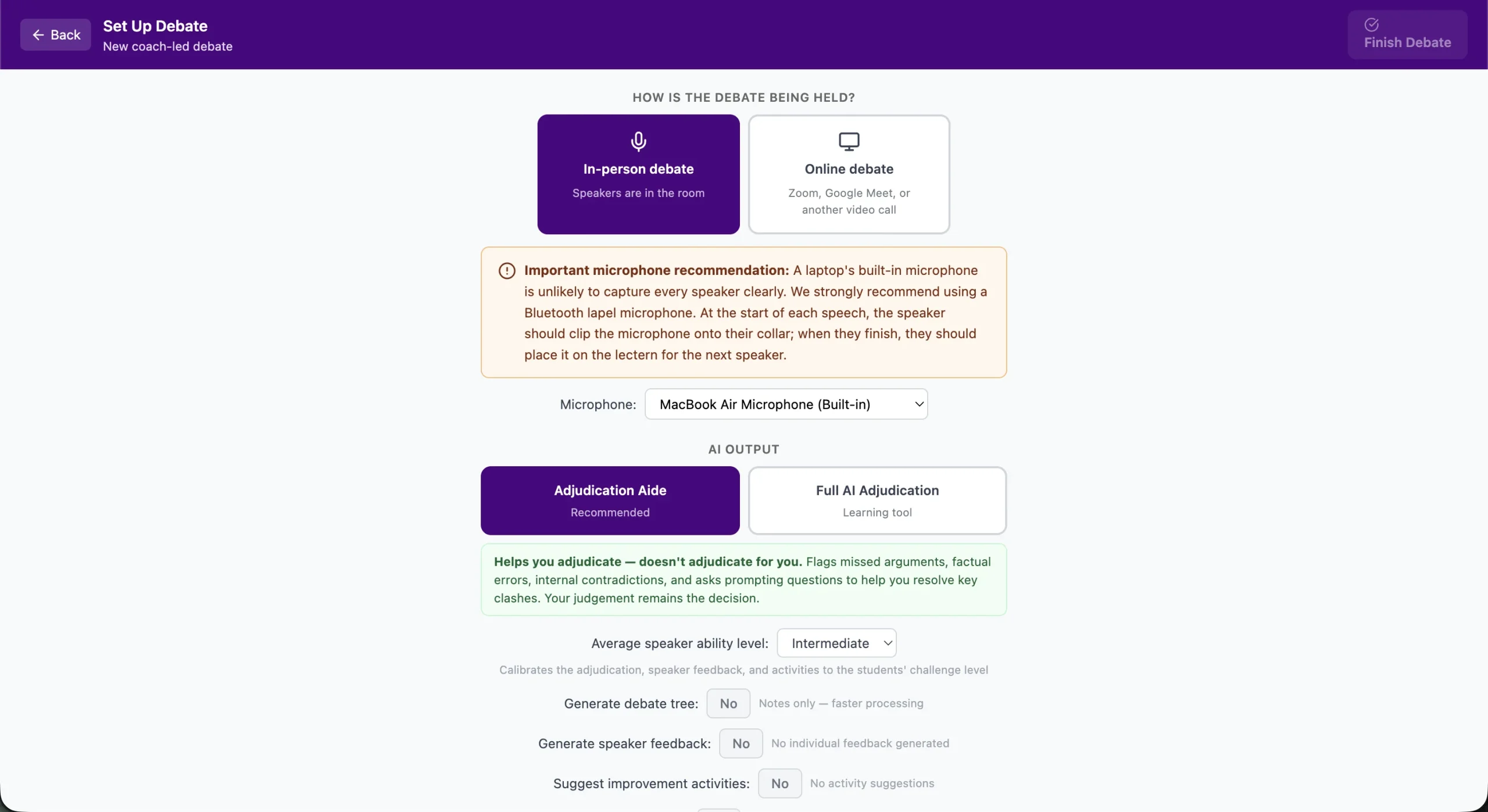
Simple setup for live adjudication
AI-assisted adjudication relies on clear audio from the debate. For reliable capture, use a Bluetooth lapel microphone with the device running Symbai.
There is no need for specialist audio equipment — a basic lapel microphone costing around $20 is sufficient.
Spend less of the round fighting your notes — and give students feedback that lasts long after the adjudication finishes.
Live Human Debating
Without Symbai
- Practice rounds can become isolated events.
- Notes, ballots and feedback are scattered across documents or paper.
- Students who miss the oral adjudication lose most of its value.
- Coaches have limited time to turn every practice debate into a meaningful follow-up activity.
With Symbai
- Create and organise live debates from the coach account.
- Keep the debate, adjudication and feedback connected.
- Share completed debates with students for review.
- Use the same round as the basis for later coaching and practice.
- Preserve useful debate history rather than starting from zero each session.
Live debating remains the centre of the club — Symbai makes each round more useful before, during and after it happens.
AI Practice & Rebuttal
Without Symbai
- Rebuttal practice usually requires another debater to be available.
- Students may only get a handful of meaningful speaking or rebuttal opportunities each week.
- Less confident students can struggle to experiment during limited live practice time.
- Coaches cannot personally provide unlimited practice to every student.
With Symbai
- Students can practise against an AI opponent independently.
- The Rebuttal Toolkit encourages more strategic responses than simply disagreeing with an argument.
- Students can request counterarguments and pressure-test their own ideas.
- DebateTree makes chains of argument and rebuttal visible.
- AI tutoring and guidance can be enabled when useful or removed when students should work independently.
Give every debater more meaningful repetitions between the live rounds that matter most.
Case Construction & Preparation
Without Symbai
- Student cases often become pages of disconnected notes.
- Arguments can sound detailed without being logically deep.
- Coaches spend significant time creating examples and explaining structure repeatedly.
- Students frequently prepare content without testing how an opposition might respond.
With Symbai
- Build arguments visually using editable DebateTrees.
- Generate exemplars that coaches can adapt to an appropriate level.
- Make claims, reasons, evidence and responses visible as parts of a larger argument.
- Stress-test cases with generated rebuttals.
- Share structured preparation that students can actually use during a debate.
Help students see the architecture of their case — and discover its weaknesses before the opposition does.