Critical thinking belongs at the centre of education.
For too long, critical thinking has been praised but not structured. Symbai exists to give thinking the same clarity, practice, and progression we expect of literacy and numeracy.
Read how we turn critical thinking from an ideal into a teachable practice.
Critical thinking belongs at the centre of education.
For too long, critical thinking has been praised but not structured. Symbai exists to give thinking the same clarity, practice, and progression we expect of literacy and numeracy.
Read how we turn critical thinking from an ideal into a teachable practice.
Critical thinking belongs at the centre of education.
For too long, critical thinking has been praised but not structured. Symbai exists to give thinking the same clarity, practice, and progression we expect of literacy and numeracy.
Read how we turn critical thinking from an ideal into a teachable practice.
Almost everyone agrees that critical thinking matters. As the world becomes more complex and information more abundant, its importance is only increasing.
Yet for all this agreement, critical thinking has rarely been treated as something that needs to be deliberately built. It is expected to emerge indirectly, rather than being taught with the same care and intention as other core capabilities.
Symbai exists because this gap did not feel acceptable. It was created by teachers who had seen how powerful structured, debate-based reasoning could be for students, and how rarely that power reached beyond a small minority. Rather than leaving critical thinking to chance, Symbai was built to take the challenge seriously.
Why critical thinking struggles to take root in schools
Critical thinking is widely praised in education, but rarely treated with the same seriousness as literacy or numeracy. The reason is not lack of belief. It is lack of structure.
Reading and maths benefit from shared definitions, clear progressions, assessable outputs, and well understood interventions. Critical thinking, by contrast, is often treated as abstract, context dependent, or too difficult to measure reliably at scale. As a result, it receives encouragement rather than infrastructure.
This gap is not accidental. It is structural.
Read the educator’s story behind this insight
Symbai’s approach
Symbai was built to address these structural barriers directly. Instead of treating critical thinking as a vague disposition or an enrichment outcome, Symbai treats it as a set of learnable, observable reasoning skills grounded in the pedagogy of debate.
By making thinking explicit, structured, and visible, Symbai allows critical thinking to be practised, reviewed, and supported with the same clarity we expect of other core capabilities.
The constraints Symbai is built to solve
Critical thinking has lacked shared definition and measurement
Symbai response
Context dependence
Symbai response
Accountability and ownership
Symbai response
“Enrichment only” mindset
Symbai response
Intervention and improvement
Symbai response
Teacher workload and training
Symbai response
Debate is the strongest general purpose critical thinking framework.
Wherever arguments appear, the same thinking moves apply — and debate trains all of them at once.
Make claims explicit
Ideas must be stated clearly, not implied.
Justify with reasons and evidence
Students must explain why information matters.
Anticipate opposition
Counterarguments are expected, not optional.
Weigh competing considerations
Trade-offs and impacts must be compared.
Revise under challenge
Good ideas change when tested.
Immediate feedback
Students receive timely feedback that helps them refine ideas while thinking is still active.
Many classroom activities claim to develop critical thinking, but few consistently make reasoning explicit, challenged, and revisable.
How common approaches compare
Makes reasoning explicit, adversarial, and revisable by design. Claims must be justified, challenged, weighed, and refined, creating consistent cognitive pressure across contexts.
Encourages exploration and synthesis, but often leaves reasoning implicit. Students can gather information without being required to test claims against opposition or revise ideas under challenge.
Develops clarity and justification, but conflates reasoning with literacy and is slow to practise and assess. Feedback often arrives after thinking has moved on.
Promotes engagement and dialogue, but reasoning is ephemeral and unevenly distributed. Confident speakers dominate, and ideas are hard to revisit or refine.
Builds motivation and real-world connection, but cognitive demand varies widely. Reasoning can be uneven, shared, or hidden within group work.
How common approaches compare
Debate
Makes reasoning explicit, adversarial, and revisable by design. Claims must be justified, challenged, weighed, and refined, creating consistent cognitive pressure across contexts.
Open-ended research
Encourages exploration and synthesis, but often leaves reasoning implicit. Students can gather information without being required to test claims against opposition or revise ideas under challenge.
Writing-based argument
Develops clarity and justification, but conflates reasoning with literacy and is slow to practise and assess. Feedback often arrives after thinking has moved on.
Discussion-based learning
Promotes engagement and dialogue, but reasoning is ephemeral and unevenly distributed. Confident speakers dominate, and ideas are hard to revisit or refine.
Project-based learning
Builds motivation and real-world connection, but cognitive demand varies widely. Reasoning can be uneven, shared, or hidden within group work.
Many pedagogies belong in education. But when it comes to developing critical thinking, debate remains the most powerful framework. Its limitation has never been its pedagogy, but its ability to scale.
Why debate has remained peripheral
Not because debate is weak — but because classrooms weren’t built for it.
Live team configuration required
Traditional debate depends on having the right number of students available at the same time, assigned to opposing roles, and ready to engage live.
Hard to run at classroom scale
A single teacher cannot realistically run multiple 3v3 debates in one lesson, either sequentially or simultaneously, without most students waiting passively.
Hard to practise frequently
Hard to practise frequently Without shared infrastructure or a persistent record of reasoning, debate becomes episodic rather than a regular part of learning.
Symbai starts from this constraint. Instead of asking classrooms to adapt to the demands of traditional debate, it rethinks how debate’s core cognitive work can be externalised, supported, and practised at scale.
How Symbai makes debate teachable at scale
| . | Traditional debating | Traditional argument mapping |  |
|---|---|---|---|
| What Symbai combines | Live, spoken argument between opposing teams. Reasoning happens through performance and real-time exchange. | A visual method for breaking arguments into claims, reasons, evidence, and objections. Reasoning is externalised, but static. | A digital argument-mapping canvas where students build structured arguments and face AI opposition directly inside the map. Reasoning develops through iterative challenge and response. |
Why debate hasn’t scaled in ordinary classrooms
| Live configuration required | Requires the right number of students, roles, and synchronised participation. | Can be done individually or asynchronously. | No teams needed — AI provides on-demand opposition inside the map. |
|---|---|---|---|
| Classroom scalability | Difficult to run multiple debates in one lesson; most students wait passively. | Works at scale, but lacks active challenge. | Whole classes can practise simultaneously within the same structure. |
| Practice frequency and continuity | Episodic — limited to scheduled debates with little persistence between sessions. | Creates records, but is rarely used frequently due to effort required. | Enables frequent cumulative practice with persistent maps that evolve over time. |
Why critical thinking still isn’t taught as a core skill
| Scaffolding and entry point | Entry depends on public speaking confidence. | Provides structure, but can still feel demanding without guidance. | AI scaffolding supports students step-by-step as reasoning develops. |
|---|---|---|---|
| Targeted intervention and diagnosis | Weaknesses are addressed holistically, usually after the debate ends. | Weaknesses can be identified, but intervention relies on manual review and teacher time. | AI categorises reasoning moves, enabling targeted skill-level support. |
| Teacher time and instructional load | Requires significant preparation, coordination, and live facilitation. | Needs careful setup and manual feedback to work at scale. | AI assists with opposition, feedback, and setup, reducing teacher load while keeping instructional control with educators. |
Symbai preserves what makes debate powerful — and uses AI to remove the constraints that have always kept it rare.
How Symbai makes debate teachable at scale
Combining proven pedagogies
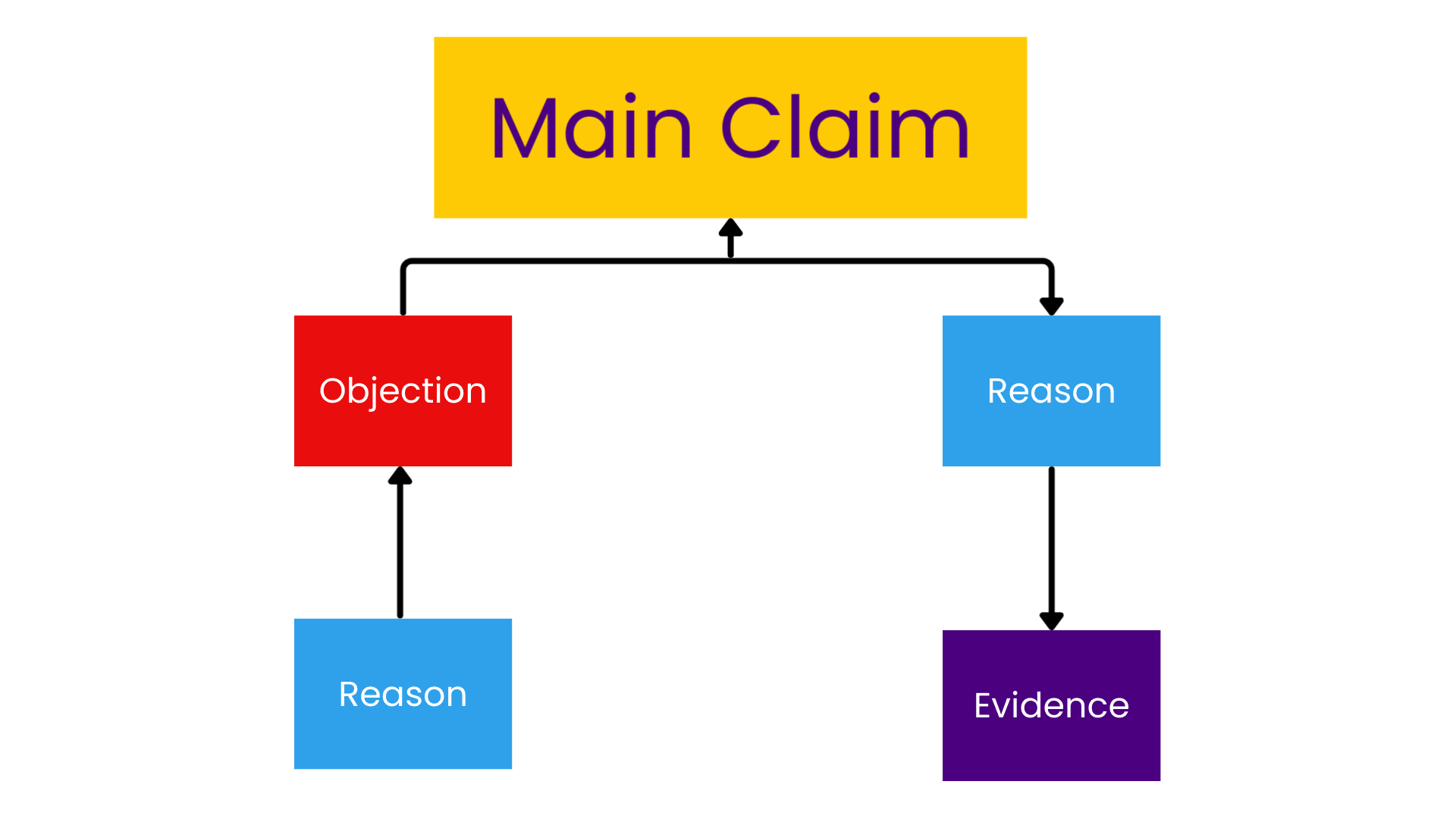
Traditional debating develops reasoning through live, spoken exchange between opposing teams, where ideas are tested through performance and real-time response. Traditional argument mapping takes a different approach by externalising reasoning into visual structures of claims, reasons, evidence, and objections, making arguments easier to analyse but largely static. Symbai brings these two approaches together in a digital argument-mapping canvas where students build structured arguments while facing active AI opposition directly inside the map, allowing reasoning to develop through iterative challenge and response rather than performance alone or static analysis.
How Symbai makes debate workable at classroom scale
Removing the need for live team configuration
Symbai
No teams needed — AI provides on-demand opposition directly inside the map.
Formal Debating
Requires the right number of students, defined roles, and synchronised participation.
Traditional Argument Mapping
Can be done individually or asynchronously.
Scaling debate beyond a few students
Symbai
Whole classes can practise simultaneously within the same structure.
Formal Debating
Difficult to run multiple debates in one lesson; most students wait passively.
Traditional Argument Mapping
Works at scale, but lacks active challenge.
From episodic debate to regular practice
Symbai
Enables frequent, cumulative practice with persistent maps that evolve over time.
Formal Debating
Episodic — limited to scheduled debates with little persistence between sessions.
Traditional Argument Mapping
Creates records, but is rarely used frequently due to the effort required.
How critical thinking becomes a core, teachable skill
Supporting students into strong reasoning
Symbai
AI scaffolding supports students step-by-step as reasoning develops.
Formal Debating
Entry depends on public-speaking confidence.
Traditional Argument Mapping
Provides structure, but can still feel demanding without guidance.
Making thinking visible and diagnosable
Symbai
AI categorises reasoning moves, enabling targeted, skill-level support.
Formal Debating
Weaknesses are addressed holistically, usually after the debate ends.
Traditional Argument Mapping
Weaknesses can be identified, but intervention relies on manual review and teacher time.
Making debate sustainable for teachers
Symbai
AI assists with opposition, feedback, and setup, reducing teacher load while keeping instructional control with educators.
Formal Debating
Requires significant preparation, coordination, and live facilitation.
Traditional Argument Mapping
Needs careful setup and manual feedback to work at scale.
Symbai preserves what makes debate powerful — and uses AI to remove the constraints that have always kept it rare.
Why AI changes what debate pedagogy can do
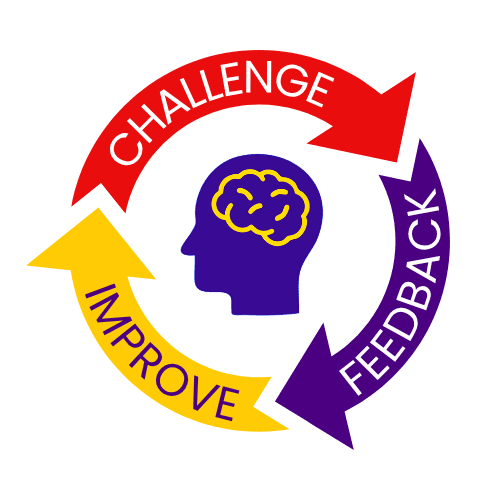
Debate has always relied on opposition. Strong thinking develops when ideas are tested against other ideas that push back.
In classrooms, that opposition has traditionally come from other students or from teachers. This makes rigorous debate hard to sustain at scale.
Symbai introduces a different model. Students debate an AI opponent that is designed not to give answers, but to challenge reasoning. The AI questions assumptions, surfaces counterarguments, and forces students to clarify and defend their ideas.
This is not automation. It is symbiosis. The student supplies judgment, creativity, and intent. The AI supplies constant, structured opposition. Together, they recreate the cognitive pressure of real debate on demand.
How Symbai Enables Debate In A Classroom
1
Structured debate content is generated from existing curriculum
Debate structures are rapidly created around the material already being taught. AI transforms topics, texts, or questions into clear, structured argumentative cases, dramatically reducing preparation time and making rigorous debate feasible at classroom scale.
2
Learning conditions are deliberately configured
The debate environment is adapted for different learners. Teachers determine the level of challenge, the forms of reasoning available, and the nature of opposition—deciding how much support or pressure each student should encounter.
3
Everyone practises with real opposition
Each student debates within their own structured space, responding to continuous opposition. Reasoning unfolds through claims, evidence, objections, and revisions, with every student actively engaged rather than waiting for turns.
4
Reasoning becomes visible and reviewable
Argument development is captured as a persistent record of reasoning. This makes patterns of thinking, strengths, and gaps visible over time — supporting reflection, diagnosis, and growth.
How critical thinking becomes cumulative
1
The same thinking framework appears across subjects
Students encounter a consistent set of reasoning moves wherever arguments arise. Whether in science, humanities, or ethics, they are asked to construct claims, justify them, anticipate objections, and revise ideas under challenge.
2
Strengths and weaknesses emerge in different contexts
As students practise across subjects, patterns become visible. A learner might show strong case construction in both science and history, but struggle with rebuttal in scientific contexts while excelling at it in humanities.
3
Reasoning skills can be compared and developed deliberately
Because the underlying framework is shared, these patterns are intelligible rather than incidental. Teachers can distinguish between subject knowledge gaps and reasoning gaps, and target specific thinking moves rather than relying on general impressions.
4
Critical thinking develops as a core capability over time
As students revisit the same reasoning structures across years and subjects, progress compounds. Skills strengthened in one context support performance in others, allowing critical thinking to develop alongside literacy and numeracy as a sustained, cumulative capability.
Why AI changes what education must prioritise
Artificial intelligence does not reduce the importance of literacy or numeracy. It changes what those skills are for. When information, text, and analysis can be generated at scale, the scarce capabilities become judgment, participation, and collective reasoning.
In this context, education’s task shifts. The question is no longer only whether students can produce work, but whether they can interrogate claims, challenge assumptions, and decide how powerful tools should be used. These capacities are inherently civic. They shape how societies reason together.
This is why critical thinking cannot remain fragmented or optional. It requires the same continuity, visibility, and cultural support that literacy and numeracy developed over time — and why debate, as a structured form of collective reasoning, becomes newly central.
From today’s constraints to tomorrow’s culture
Where are we now
Fragmented and Inconsistent
Critical thinking is widely acknowledged as important, but taught inconsistently across subjects. It lacks shared structures, common language, and cumulative tracking across years.
Powerful, but Limited to a Few
Formal debating develops exceptional reasoning and civic skills. But participation depends on access, confidence, time, and local opportunity, keeping it limited to a small fraction of students.
Where critical thinking needs to be
A Shared Skill That Compounds
Critical thinking is practised regularly across subjects and year levels, using shared structures that make progress visible, comparable, and cumulative.
Debating at Scale
More students arrive prepared and confident to participate in live debate. Teams, clubs, and leagues grow by drawing from a much wider base of capable reasoners.
Strengthening the communities where reasoning becomes real
Around the world, debating competitions show what a culture of reasoning can look like — students challenging ideas, thinking under pressure, and enjoying the intellectual “brain burn” of serious argument.
Symbai’s role is simple: help more students reach those spaces.
Why many students never enter debate
Two barriers quietly prevent many students from stepping into debate communities:
• uncertainty about whether their ideas are strong enough
• anxiety about speaking publicly
For many students, the first barrier stops them before they ever try.
Where Symbai fits
Symbai helps students practise constructing and testing arguments before entering debate communities.
By strengthening ideas first, students arrive more confident in what they have to say — leaving the normal challenge of public speaking.
Symbai doesn’t replace debate communities. It helps more students arrive ready to participate in them.
Spreading the Framework
Symbai provides shared reasoning structures — a framework for structured debate and critical thinking.
This framework will soon become broadly accessible through a permanent free tier. But it also spreads through real programmes that put it into practice.
Here are some of the ways we’re doing that:
Symbai Debate Club Model
Symbai Learning Hub
Free Access for Teaching Colleges
How structured reasoning takes root
Symbai is designed to create value at every level — from individual students to entire schools — without waiting for system-wide adoption.
Each student, club, classroom, or school that uses the framework creates visible evidence of what structured reasoning can achieve. As these examples accumulate, they help shift expectations about what critical thinking education can look like — encouraging broader systems to recognise and support what is already working.
Find your starting point
Individual Students
Why Symbai matters here
Not every student has access to a debate coach, a trained teacher, or a local debating circuit. Symbai gives individual debaters a way to practise structured argumentation anywhere — with consistent opposition and clear reasoning frameworks — regardless of geography or institutional support.
What becomes possible
Debaters can build and track their reasoning over time. Argument maps persist across topics, years, and even school changes, creating a personal record of thinking development that doesn’t disappear when classes or teachers change.
What often changes next
As students gain confidence and clarity in their reasoning, that progress becomes visible to others — coaches, teachers, or peers — creating natural opportunities to extend the same structures into shared settings.
Debate Clubs & Teams
Why Symbai matters here
Debate clubs are often centres of quiet academic excellence, sustained by staff goodwill and informal expertise. Symbai gives clubs a way to formalise what they already do well — without losing rigour or increasing workload.
What becomes possible
Clubs can move from being episodic, extracurricular spaces to becoming visible engines of reasoning practice. Structured maps, AI opposition, and cumulative records turn debate from something performed occasionally into something practised deliberately and frequently.
What often changes next
As clubs produce clearer evidence of thinking growth and transferable skills, they naturally become reference points within schools — demonstrating that structured critical thinking is not only possible, but scalable beyond the club itself.
See how debate clubs use Symbai to scale high-quality reasoning beyond competitions and meetings.
Classrooms & Teachers
Why Symbai matters here
Teachers are often asked to develop critical thinking while covering fixed content and meeting assessment demands. Symbai allows teachers to teach the same curriculum while making reasoning explicit — without adding unsustainable marking or preparation time.
What becomes possible
A single teacher can generate rich, comparable evidence of student thinking: how claims are formed, how evidence is used, how objections are handled. Performance metrics emerge naturally from the structure of the work, not from additional testing.
What often changes next
Because this approach improves visibility without disrupting content coverage, it often becomes a safe, low-risk pilot — providing senior leadership with concrete evidence that structured critical thinking can be taught at scale.
Schools & Leadership
Why Symbai matters here
At an institutional level, critical thinking is often treated as important but impractical — difficult to teach consistently and even harder to track over time. Symbai addresses that feasibility problem without requiring changes to curriculum, assessment schedules, or subject content.
What becomes possible
A school can run the same content it already teaches while building a shared, internal record of student reasoning across year levels and subjects. Because argument structures are consistent, schools can begin to develop a coherent picture of students’ critical thinking — something closer to a longitudinal record than a one-off assessment.
What often changes next
When multiple schools independently demonstrate that a stable, comparable record of critical thinking is possible, the conversation naturally shifts. Expectations emerge across schools, student movement becomes easier to support, and education authorities face pressure to recognise, coordinate, and resource what is already working — turning isolated success into system-level alignment.
Thinking at a whole-school or system level? Start a conversation with us.
📩 [email protected] or book a demo
Help build what comes next
Making critical thinking central to education takes more than tools. It takes people — educators, coaches, builders, and partners — willing to help carry the work forward.
Work with Symbai
We’re always interested in hearing from people who want to contribute — as debate coaches, developers, researchers, educators, or partners. If you see yourself in this mission, we’d love to talk.
Stay connected
If you’d like updates on our thinking, new programs, and how structured debate is evolving in practice, you can follow along here.
Work with Symbai
Stay connected
We’re always interested in hearing from people who want to contribute — as debate coaches, developers, researchers, educators, or partners. If you see yourself in this mission, we’d love to talk.
If you’d like updates on our thinking, new programs, and how structured debate is evolving in practice, you can follow along here.