
Select a preferred date and workshop type below.
Final format and pricing will be confirmed with you after we understand your context.
Hundreds of thousands of students across 60 countries choose to spend their free time in formal debating competitions because it improves their critical thinking skills.
Formal debating improves:
Dynamic reasoning — adapting ideas under pressure
Strategic thought — anticipating and countering objections
Cognitive discipline — structuring arguments with clarity and purpose
Argument mapping has been around for hundreds of years, used by philosophers, scientists, and modern critical-thinking educators to make critical thinking clearer by drawing it out.
And for good reason: when done well, argument mapping is one of the most effective ways to improve critical thinking and develop sharper logical reasoning.
Argument mapping helps you:
Debating develops the habits that critical thinking courses try to teach:
Dynamic reasoning — adapting ideas under pressure
Strategic thought — anticipating and countering objections
Cognitive discipline — structuring arguments with clarity and purpose
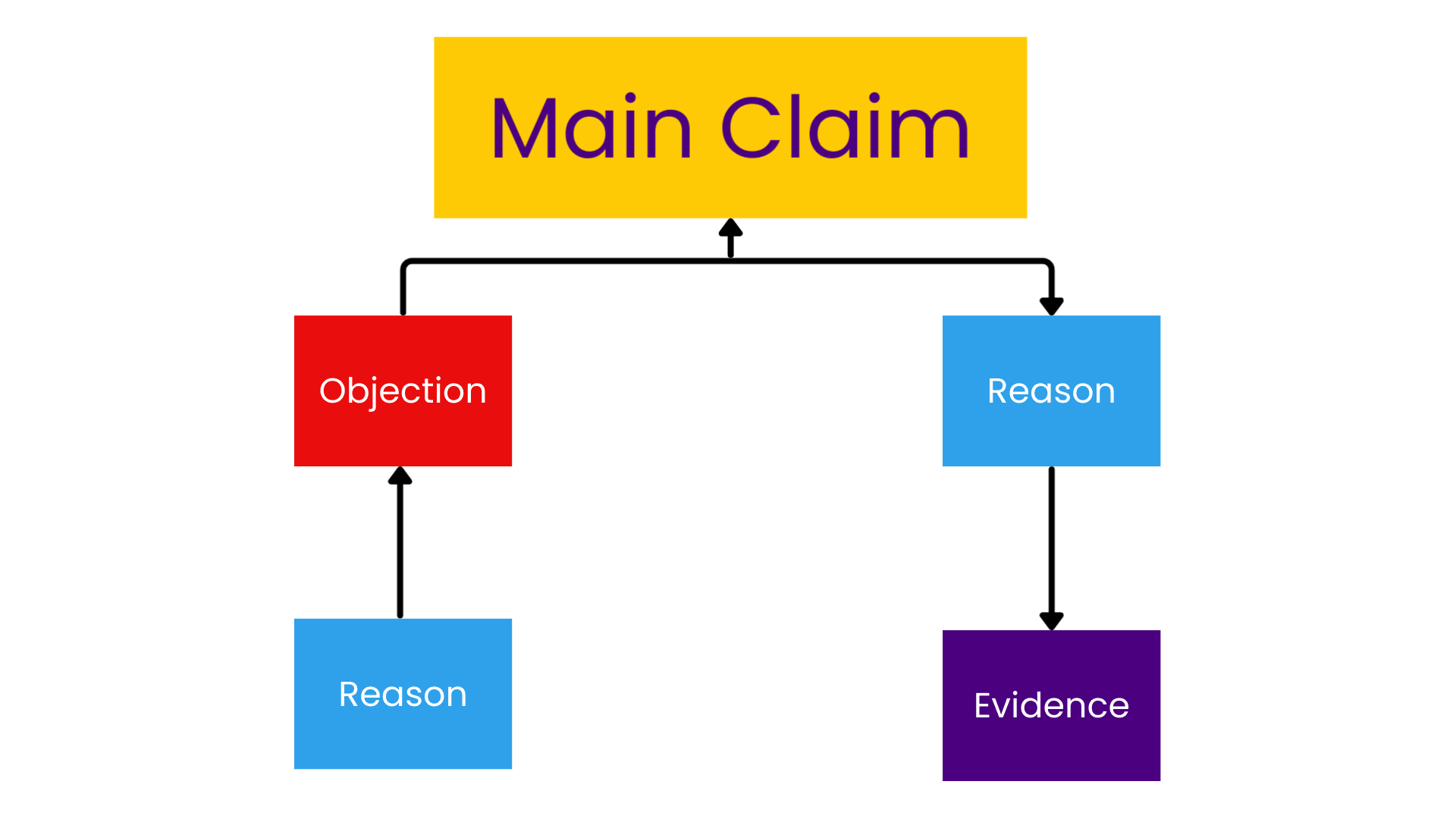
If debating is the clash of ideas, argument mapping is the architecture that makes clear thinking possible.
It’s the practice of breaking critical thinking into smaller parts — claims, evidence, objections, and assumptions — and arranging them so the logic becomes visible.
Argument mapping has been around for hundreds of years, used by philosophers, scientists, and modern critical-thinking educators to make critical thinking clearer by drawing it out.
And for good reason: when done well, argument mapping is one of the most effective ways to improve critical thinking and develop sharper logical reasoning.
Argument mapping helps you:
These benefits make it a powerful method for anyone looking to enhance critical thinking skills, improve decision-making, or analyze arguments more effectively.
But traditional argument mapping has limits: